
Gentle cleansing is extremely important for skin with rosacea. Twice-daily cleansing removes excess oil, environmental debris, bacteria and other microorganisms, as well as the residue from skin care and makeup products. It's the first step in helping to soothe and treat your skin.
Choosing a Cleanser
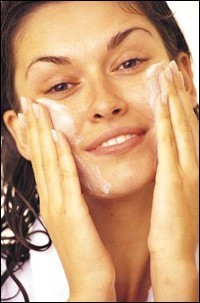
To avoid irritation, use the fingertips or a soft cotton pad or cloth. In general, you’ll want to avoid abrasive washcloths, exfoliating cleansers and sponges.
Choose your cleanser with care according to your skin type and your personal triggers. Some cleanser ingredients to avoid that many patients say irritate their skin include alpha- and beta-hydroxy acid, salicylic acid, glycolic acid, sodium lauryl sulfate, alcohol, witch hazel, fragrances, menthol, and peppermint and eucalyptus oil. Keep in mind that unless your skin is oily, non-soap cleansers may be the best option — they contain less than 10% soap, rinse off easily and have a neutral pH that's closer to the natural pH of the skin.
Another cleansing option is micellar water, which is made of purified water, moisturizer and a very mild soap. It can be applied with soft cotton pads, does not strip the skin of oils, and does not need to be rinsed off, making it a good option for sensitive skin of all types.
- Dry to normal or combination skin. A wide range of non-soap cleansers containing gentle ingredients is available, including cream or milk cleansers, low-foaming cleansers, sulfur cleansers and micellar water. There are a number of options developed specifically for sensitive or redness-prone skin.
- Very dry skin. A creamy, low-foaming, non-soap cleanser may be ideal for skin that's very dry — these types of formulas often leave behind a thin film that helps skin hold moisture.
- Oily skin. For very oily skin, wash with a mild soap, taking care to avoid scrubbing. Aggressive rubbing or over-cleansing can irritate skin.
Cleansing Tips
To minimize skin irritation, try this gentle, step-by-step cleansing routine developed by leading dermatologists for people with rosacea.
- Using your clean fingertips, a soft cloth or a soft cotton pad, wash skin with a cleanser suitable for your skin type. Avoid using an abrasive washcloth or sponge, which may irritate.
- Rinse away cleanser with lukewarm water. Hot or cold water may cause flushing or irritation. If your face is irritated by water at any temperature, try using a soothing cream cleanser you can simply tissue off or something like micellar water, which doesn’t need to be washed off.
- Gently blot your face dry with a thick-pile cotton towel. Don't rub skin, as this may cause irritation.
- Since stinging most often occurs on damp skin, wait until your face is completely dry before applying any topical medication. Slowly reduce the drying time until you find the least amount of time your skin needs to avoid a stinging sensation.
- After applying topical medication, wait five to 10 minutes more before applying moisturizer, sunscreen or makeup.
- If you have ocular rosacea, be sure to follow your doctor's directions for eyelid scrubbing and medication.
For useful advice on caring for skin with rosacea, visit these areas of the site: