
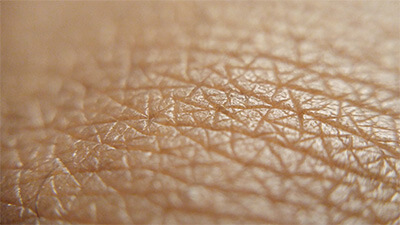
 People with rosacea often have a damaged moisture barrier, which leads to dry, irritated skin. To explain why, we have to look at the structure of the skin and how it functions.
The outermost layer of the skin is known as the stratum corneum. The dry, flattened cells in the stratum corneum form a sort of brick wall, with fatty compounds called lipids acting as mortar.
“The stratum corneum contains lipids and other molecules that don’t want to let things through,” said Valerie George, a cosmetic chemist and cohost of The Beauty Brains podcast, at the 2026 Science of Skin Summit in Austin, TX. “That’s the function of the skin, to prevent things from leaving and to protect from things coming in.”
About half of those lipids are ceramides, which help protect against water loss and also offer some UV protection. Exfoliants like harsh soaps, gritty scrubs and toners break down lipids and remove layers of cells, leaving the skin dry, damaged and vulnerable. In rosacea skin, it can also result in redness, inflammation, and itching or burning sensations.
The body naturally produces ceramides and other substances to replenish the skin barrier, but this ability weakens as we age, and may not be able to keep up with repeated exfoliations. In addition, studies have found that the make-up of lipids in rosacea skin differs from healthy skin, possibly reducing the ability to prevent water loss.1 Proper skin care, including moisturizers containing ceramides and other protectants, is therefore critical to repair the damage and reduce water loss.
George noted that the skin changes throughout the day, offering the highest amount of barrier protection and sebum production during daylight hours, and lower levels at night as it recovers.2
“Your body knows what to do in the sun, but at night, your barrier is at its lowest,” she said. “The good news is because the barrier is low, skin penetration is high. So you may be losing a lot of water at nighttime — which is a reason to maybe use a richer night cream at night — but it's also the opportunity to get medication and other beneficial products into the skin.”
Getting a good night’s sleep can also help improve the skin barrier. “A study found that good quality sleepers had a 30% greater skin barrier recovery and better recovery from exposure to UV light and sunburn compared to poor sleepers,” George said.3
References:
1. Zhang X, Ning T, Feng Y. The lipid-inflammation axis in rosacea: mechanistic insights and therapeutic implications. Front Immunol. 2026 May 4;17:1820173. doi: 10.3389/fimmu.2026.1820173. PMID: 42158863; PMCID: PMC13180627.
2. Matsui MS, Pelle E, Dong K, Pernodet N. Biological Rhythms in the Skin. Int J Mol Sci. 2016 May 24;17(6):801. doi: 10.3390/ijms17060801. PMID: 27231897; PMCID: PMC4926335.
3. Oyetakin-White P, Suggs A, Koo B, et al. Does poor sleep quality affect skin ageing? Clin Exp Dermatol. 2015 Jan;40(1):17-22. doi: 10.1111/ced.12455. Epub 2014 Sep 30. PMID: 25266053.