
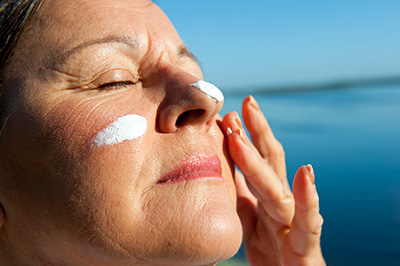
 Sun exposure and hot weather are two of the top three self-reported rosacea triggers, and using sunscreen is essential for avoiding flare-ups. Above all, the best sunscreen is the one that you will use regularly. However, even though 57% of Americans report taking steps to protect their skin from the sun, one-third still got a sunburn in the past year, according to recent data from the American Academy of Dermatology. In other words, even if you wear sunscreen regularly, it’s possible you may need to update your sun protection routine.
There are two main types of sunscreen, based on active ingredients. Sunscreen whose main ingredient is zinc oxide or titanium dioxide is usually called mineral or physical sunscreen. Sunscreen with a main active ingredient like oxybenzone, avobenzone, or octinoxate is often called chemical sunscreen. But this distinction – between “mineral” and “chemical” sunscreens – can be misleading, as zinc oxide and titanium oxide are both chemicals, and the term “chemical” is sometimes used to scare people away from using sunscreen altogether. In fact, misinformation about sunscreen is rampant online, with nearly half of all Americans, and 64% of Gen Z, reporting that they have encountered it, according to the AAD.
So what are the meaningful differences between mineral and chemical sunscreens? Both generally work the same way, by absorbing sunlight and turning it into heat. Mineral sunscreen does reflect about 5-10% of UV rays, but the vast majority are absorbed into the skin.
Some people with rosacea may find mineral sunscreen to be more tolerable for their sensitive skin. However, modern chemical sunscreen tends to be less irritating than its predecessors, and some people with sensitive skin still have issues with mineral sunscreen, so there’s no hard and fast rule. Once again – there is no “best” sunscreen, so a little bit of trial and error may be necessary. The sunscreen that you like, that you will use every day, is the right sunscreen for you.
Additionally, the FDA just approved the first new active sunscreen ingredient since the 1990s. Bemotrizinol is a chemical sunscreen ingredient that protects against both UVA and UVB rays – what’s known as “broad spectrum” – and has been safely in use in European and Asian sunscreens for years already. We can expect some new sunscreens on the market very soon.
Whichever ingredients you prefer, aim to get one with an SPF of at least 30, and make sure the sunscreen is broad spectrum. Consider also that UVA rays can penetrate glass, so using sunscreen if you are in your car for long periods of time is a good idea.
And finally, it’s important to apply sunscreen regularly and properly. Sprays, while convenient, can be more difficult to apply evenly to the skin, so be sure to spray thoroughly to cover every part of your skin. A good rule for any sunscreen is to apply two or three tablespoons to exposed skin and one teaspoon to the face. Sunscreen of all kinds takes about 20 minutes to dry, so apply it in advance of going in the sun, so it doesn’t smear or wipe off the skin. And, of course, reapply every couple of hours, especially if you’ve been sweating or swimming.