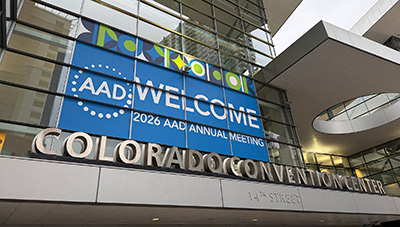
 Dermatologists presenting at the American Academy of Dermatology annual meeting in March discussed what they see as the biggest reasons acne and rosacea patients don’t stick with their prescribed treatments.
“I’d say two big barriers: one could be cost, and the other could be the complicated treatment regimen,” said Dr. Lisa Swanson of Ada West Dermatology in Boise, Idaho. “I try to keep it as simple as possible and hopefully as cheap as possible. And I give patients a lot of encouragement. ‘You're only going to get better if you use this stuff. I could prescribe everything in the world, but if you don't put it on, it's not going to do anything.’”
Patients often don’t realize the amount of time it will take to see an improvement when starting a new medication, Dr. Cheri Frey, assistant professor of dermatology at Howard University College of Medicine, noted. In clinical trials, it often takes up to three months for a topical treatment to reach full effect.
“This is where oral antibiotics can play a role,” Dr. Frey said, “because if I give patients antibiotics to begin with, while the other medications are starting, they'll start to see improvement and I think they're more likely to adhere to therapy.”
“I think another barrier would be the feel of the products,” she added. “I think some of the newer vehicles make it a little bit easier for patients to tolerate because they’re more cosmetically elegant, especially compared to generics.”
“I think a lot of times people might not want to comply with treatment because it feels like it’s out of their control,” Dr. Sandra Lee, founder of Skin Physicians & Surgeons in Upland, CA and host of the popular reality TV series “Dr. Pimple Popper,” added. “I try to take the time to teach them why this medication, this particular active ingredient will work. Because when you do that, they understand why they’re going to use it and what it’s supposed to target, and that actually makes them really proud and feel like they did something to make it change.”